The Trig Challenge
Ordnance Survey: Concept · Production · Livestream
The challenge
Ordnance Survey is one of Britain's most iconic brands, and its audience was getting older every year. OS Maps needed to matter to people more likely to explore TikTok than the countryside.
The trouble with that audience is they don't respond to being told. They're indoors, they're online, and they can smell a brand trying too hard from a long way off.
So the brief wasn't advertise the outdoors. It was: give them a reason to actually go.
The idea
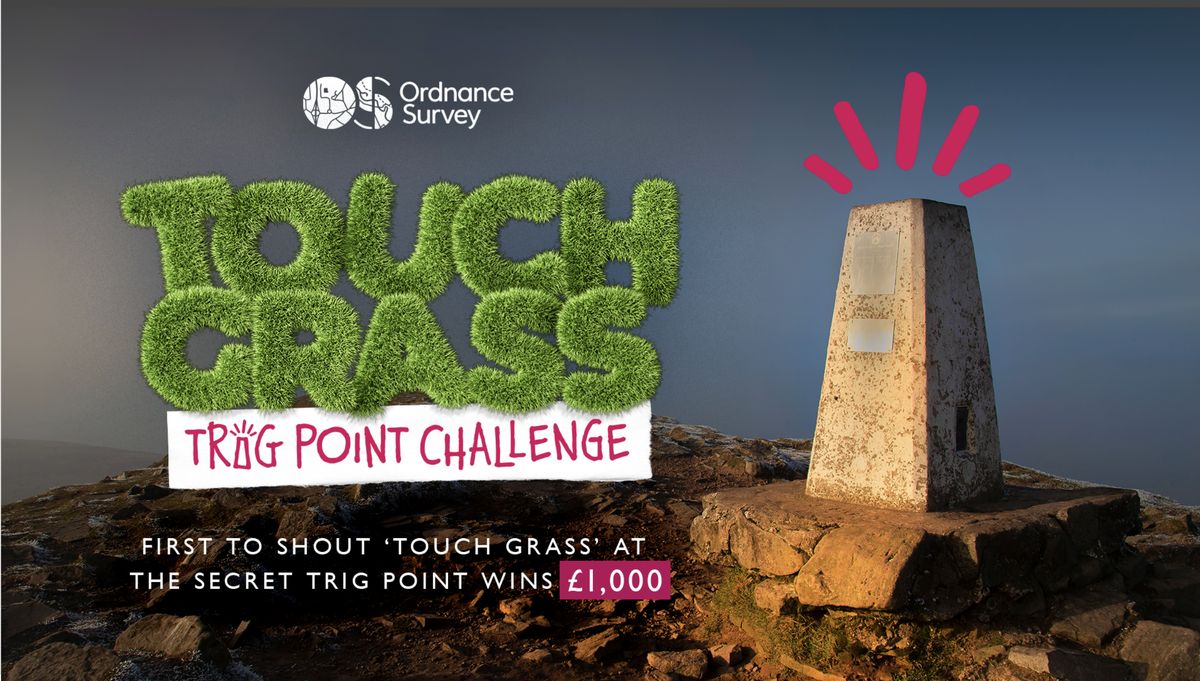
Turn 6,500 forgotten concrete pillars into a nationwide treasure hunt.
Trig pillars are the four-foot obelisks OS started planting across Britain in the 1930s to map the country by triangulation. They stopped being used in the sixties. Thousands of them are still standing out there, quietly, marked on every OS map with a small blue triangle.
So every Saturday in August we went live from one of them, location unknown. Clues came out across the morning. First person to find the pillar and shout Touch Grass at the camera won £1,000.
No entry form. No app download. Get outside and find it first.
The work
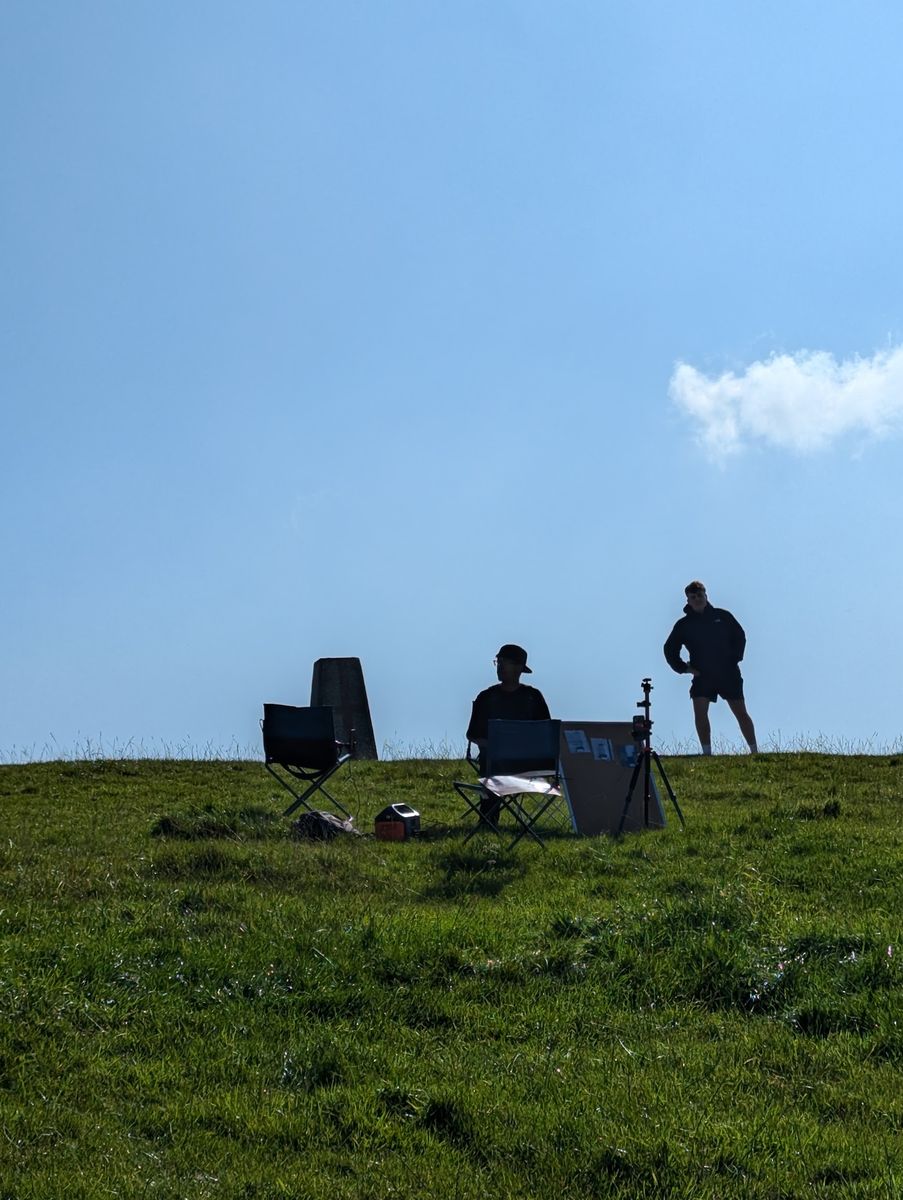
Four Saturdays. Four mystery pillars. Live across Instagram, TikTok and Twitch, presented by Max Khadar.
I worked out where they'd be before I worked out anything else. The pillars had to cover a range of difficulty, sit near towns and cities, spread evenly across the country, and (the one I cared most about) be reachable by people who don't drive. A prize competition only winnable by someone with a car isn't a competition, it's a filter.
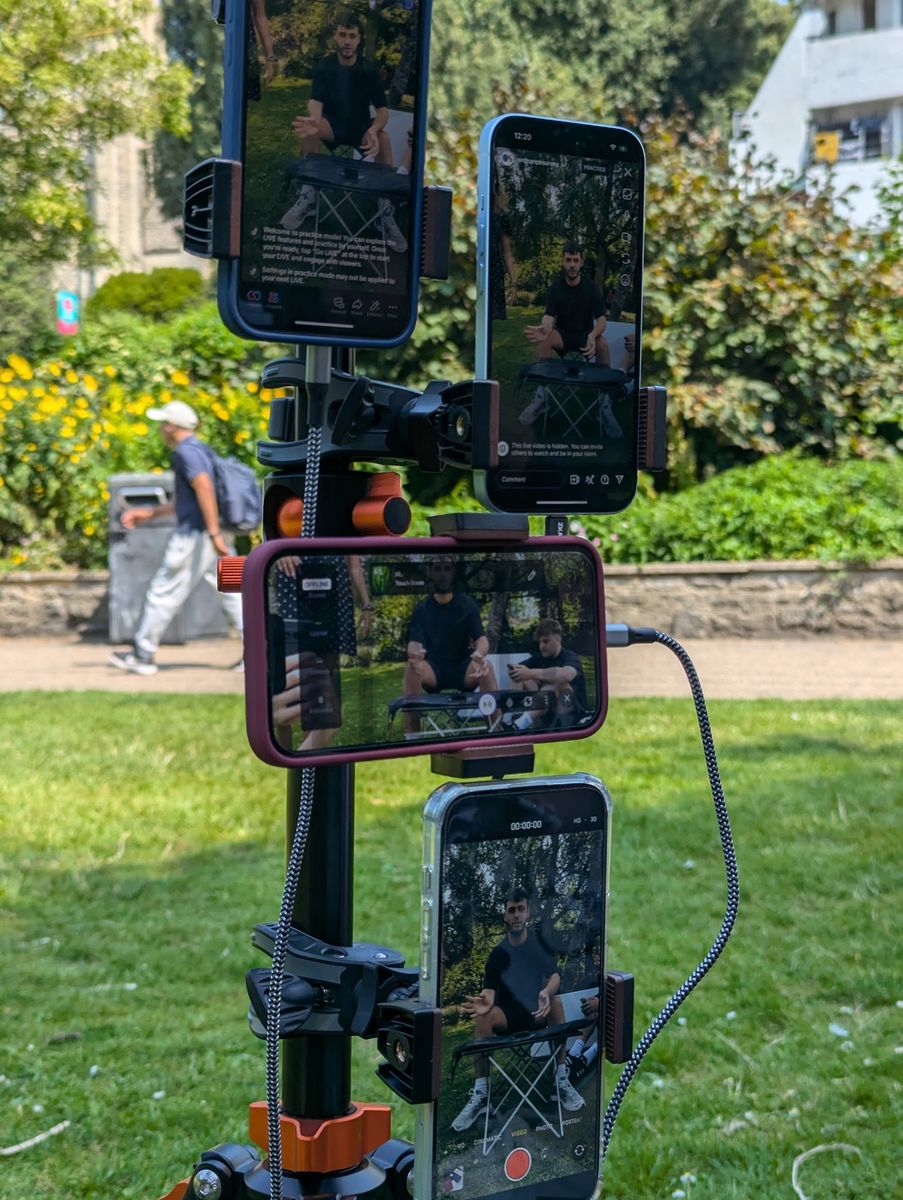
Then the rig, which had to be almost invisible. A phone on a tripod, an iPad running a timer, a different activity at each site, and a flare for the moment someone won. If it looked like a production, anyone walking past would work out what was happening and the whole thing collapsed.
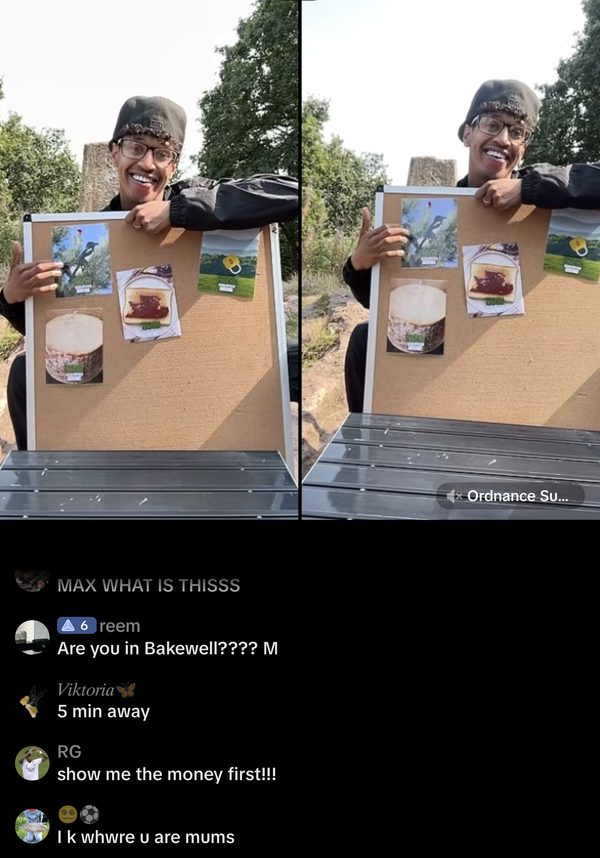
Every week fed the next one. Teasers built the location before we went live, clues came out as the hunt got warmer, then highlights and winners' reactions carried into the following weekend. Couldn't find us? Same time next week.
The hardest part was making the wait watchable. A livestream from a windswept hillside dies on its feet if nothing happens, and nobody watching knew whether it would take ten minutes or four hours. So the streams had to keep moving: fresh clues, things happening on camera, enough pace to hold an audience with no idea how long they were staying.
I came up with it and ran it end to end. Format, logistics, working out how to broadcast live from the middle of nowhere, travelling to every location to film, and cutting the teasers each week.
The results
Somebody won every single weekend. It never went unclaimed, usually within five to thirty minutes.
That's the number I'd point at. A pillar found in five minutes means people were watching the stream and running out of the door. If it had taken all day, nobody was playing.
Four pillars found. About 6,496 left.
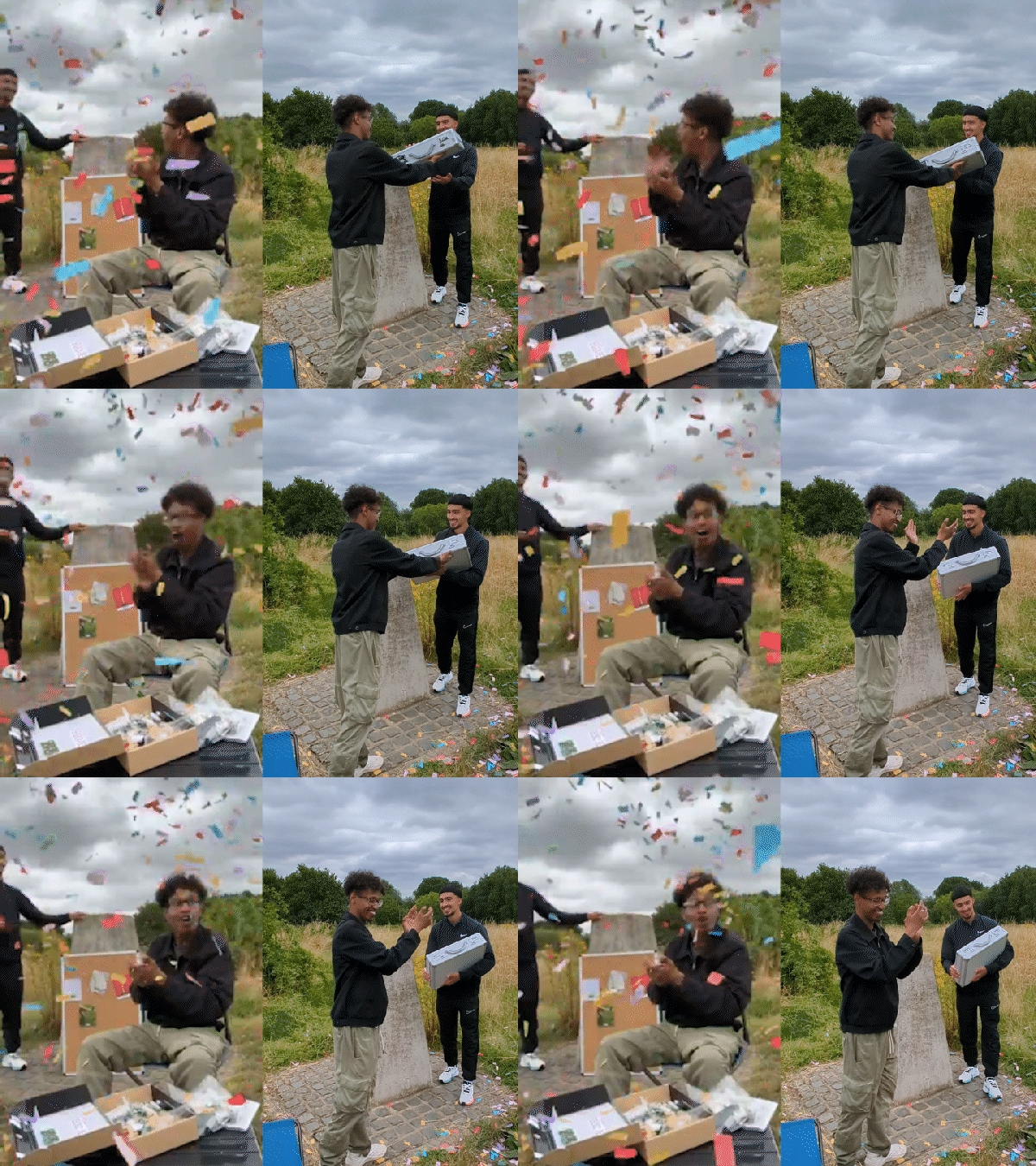
The payoff
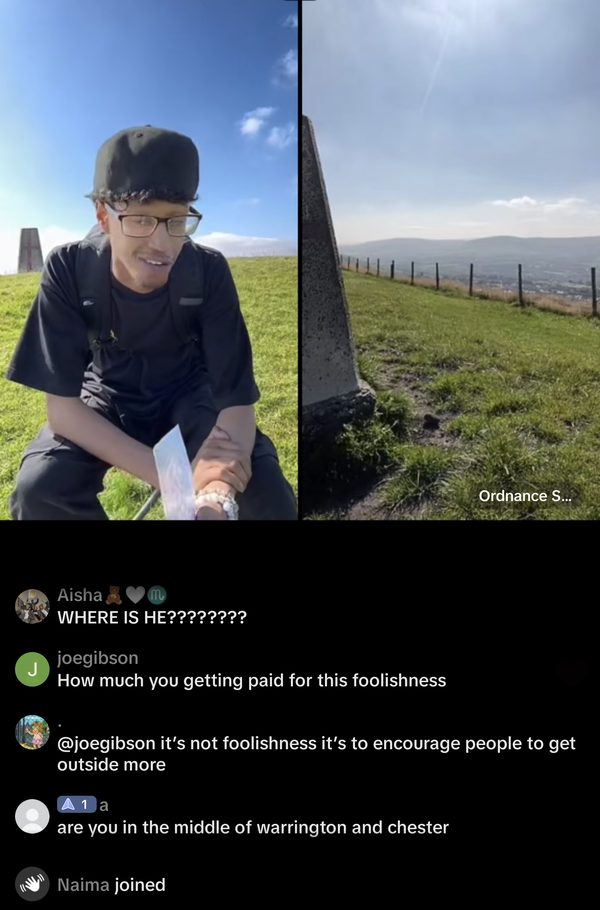
The live chat
It also proved something OS hadn't tried: that a mapping service founded in 1791 could run a live, chaotic, genuinely fun format on Twitch and TikTok, and that people would get out of bed on a Saturday to chase it.
That's what opened the door to everything after: the Touch Grass Weekender, the podcast ads, and OS landing properly in Gen Z culture. The wider Touch Grass campaign went on to win Best Marketing Campaign (Small) at the UK Agency Awards.